

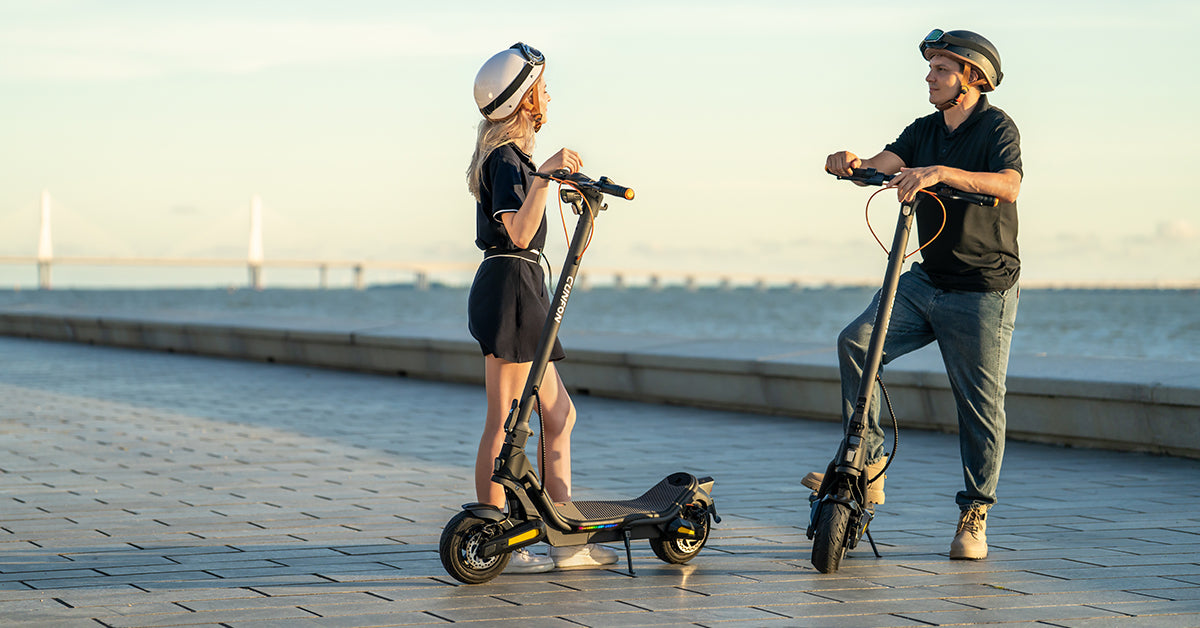
AU Stock: 20 km/h Factory Speed Setting
Our current AU-stock RS300 PRO, RS500, RZ800 and RZ1000 arrive with a 20 km/h factory speed setting. It can be changed and is not a permanent cap.
A factory setting, maximum device capability and the permitted riding speed are different checks. Lower route limits still apply.
Quick State Overview
Select your state to jump to its summary. Public-use permissions apply only to devices and routes that meet local requirements.
Swipe or scroll sideways to compare all columns.
| Location | Public-use position | Footpath riding | Key riding limits |
|---|---|---|---|
| NSW | Private scooters prohibited | Not permitted | Shared-hire trial permissions do not cover private scooters. |
| Victoria | Compliant devices only | Not permitted | 20 km/h riding limit; riders 16+. |
| Queensland | Compliant devices only | Up to 12 km/h | Up to 25 km/h where permitted; generally 16+ with a valid driver licence, subject to exemptions. |
| Western Australia | Compliant eRideables only | Up to 10 km/h | Up to 25 km/h elsewhere where permitted; riders 16+. |
| South Australia | Compliant devices only | Up to 10 km/h | Shared paths: 10 km/h; permitted bicycle routes and roads: up to 25 km/h; riders 16+. |
| Tasmania | Compliant devices only | Up to 15 km/h | Up to 25 km/h on permitted shared paths, bicycle paths and roads; riders 16+. |
| ACT | Compliant devices only | Up to 15 km/h | Shared and bicycle paths: up to 25 km/h; crossing approaches and crossings: 10 km/h. |
| Northern Territory | Restricted category / exemption | Only if device and use qualify | Ordinary motorised-scooter category: maximum 200 W and 10 km/h. |
This overview does not confirm public-use approval for any CUNFON model. Lower signed limits and local restrictions still apply.
START WITH YOUR LOCATION
Electric Scooter Rules by State & Territory
Find your state or territory below for the key riding rules and official guidance. These summaries apply to compliant devices; check your exact model before public use.

NSW
Where: Privately owned e-scooters cannot be ridden on public roads or paths, including bicycle lanes and shared paths.
What this means: A lower speed setting or motor-power rating does not change the restriction. Shared-hire trials do not authorise private scooters.
Before you ride: For private land, obtain permission and check public access and site rules. See the private-property FAQ below.

Victoria
Where: Compliant scooters may use shared-use paths, bicycle paths and roads signed at 60 km/h or below. Footpaths are excluded.
Riding limit: No more than 20 km/h. A road’s posted limit does not increase the scooter limit.
Device & rider checks: Maximum capability of 25 km/h on level ground; weight no greater than 45 kg; all other required equipment. Riders must be 16+. A driver licence is not required.

Western Australia
Where: Eligible eRideables may use permitted paths and qualifying local roads signed at 50 km/h or below.
Riding limits: 10 km/h on footpaths and pedestrian crossings; up to 25 km/h on other permitted routes.
Device & rider checks: Riders 16+; maximum 25 kg; maximum 1,250 × 700 × 1,350 mm (length × width × height); capability no greater than 25 km/h on level ground. There is no separate eRideable motor-power cap if all conditions are met.

South Australia
Where: Permitted paths, bicycle routes and qualifying roads. On roads signed at 60 km/h, remain in an operating bicycle lane; other ordinary road access is limited to roads signed at 50 km/h or below.
Riding limits: 10 km/h on footpaths, shared paths, beaches and crossings; up to 25 km/h on permitted bicycle routes and roads.
Device & rider checks: Riders 16+; maximum 45 kg; size, equipment and electrical-safety conditions apply. Use South Australia’s own device definition.

Tasmania
Where: Permitted paths and qualifying roads. Ordinary local-road access requires a 50 km/h or lower limit, no dividing line or median, and no multiple lanes on a one-way road. Check local designations.
Riding limits: 15 km/h on footpaths; up to 25 km/h on other permitted routes.
Device & rider checks: Ordinary PMD riders 16+; device under 45 kg; maximum capability of 25 km/h; dimensions less than 1,250 × 700 × 1,350 mm.

ACT
Where: Permitted paths and nature strips. Use roads only when adjacent approved routes are absent, impractical or unsafe, and return by the shortest practical route.
Riding limits: 15 km/h on footpaths; 25 km/h on permitted shared or bicycle paths; 10 km/h when approaching and crossing a crossing.
Device & rider checks: Maximum 60 kg; maximum 1,250 × 700 × 1,350 mm; maximum speed 25 km/h on level ground. Under-12s need adult supervision.

Northern Territory
Device category: The ordinary motorised-scooter category allows a maximum 200 W output and 10 km/h speed.
What this means: Our current AU-stock scooters exceed that power threshold. Their 20 km/h factory setting does not qualify them for this category.
Before public use: A non-complying vehicle needs an applicable Registrar exemption. Shared-hire permissions do not cover a privately owned CUNFON scooter. For private land, check permission, access and site rules.

Queensland
Where: Permitted paths and qualifying roads; check the official route conditions.
Riding limits: 12 km/h on footpaths and when passing pedestrians on shared paths; up to 25 km/h on other permitted routes.
Device & rider checks: Generally 16+ with a valid driver licence, subject to exemptions. Check the 60 kg maximum, dimensions and speed limiting. The 1,100 mm measure is wheelbase, not overall length. See the 2026 speed-limiting update.
Check Your Exact Scooter Before Buying
Use the specifications and speed-limiting configuration of the exact AU model and version you will receive.
Is a high-powered or dual-motor scooter legal?
There is no single national wattage limit for every e-scooter category. WA has no separate eRideable power-output cap if its other conditions are met; the NT ordinary motorised-scooter category is limited to 200 W. A higher motor rating alone does not establish public-use eligibility.
Motor wattage is not a riding-speed limit. E-bike wattage rules should not be applied to stand-up scooters. Product listings should also distinguish rated power from peak power.
Where rules test maximum device capability or require speed limiting, a changeable selected setting does not by itself demonstrate compliance. Ask us for the exact AU configuration and supporting specifications.
Confirm these details
- Speed: maximum capability and the documented speed-limiting configuration.
- Size & weight: device weight, overall dimensions and any separate wheelbase requirement. Rider-load capacity is not device weight.
- Equipment: required brakes, warning equipment, lights and reflectors.
- Electrical safety: Check applicable safety documentation for the exact scooter, battery and supplied charger, including the charger’s RCM marking and any required approval and registration. Electrical compliance is separate from permission to ride.
- Rider & route: confirm rider eligibility and the conditions for your intended route.
- Warranty & after-sales: read the written warranty terms and confirm the servicing process and replacement-parts availability before purchase.
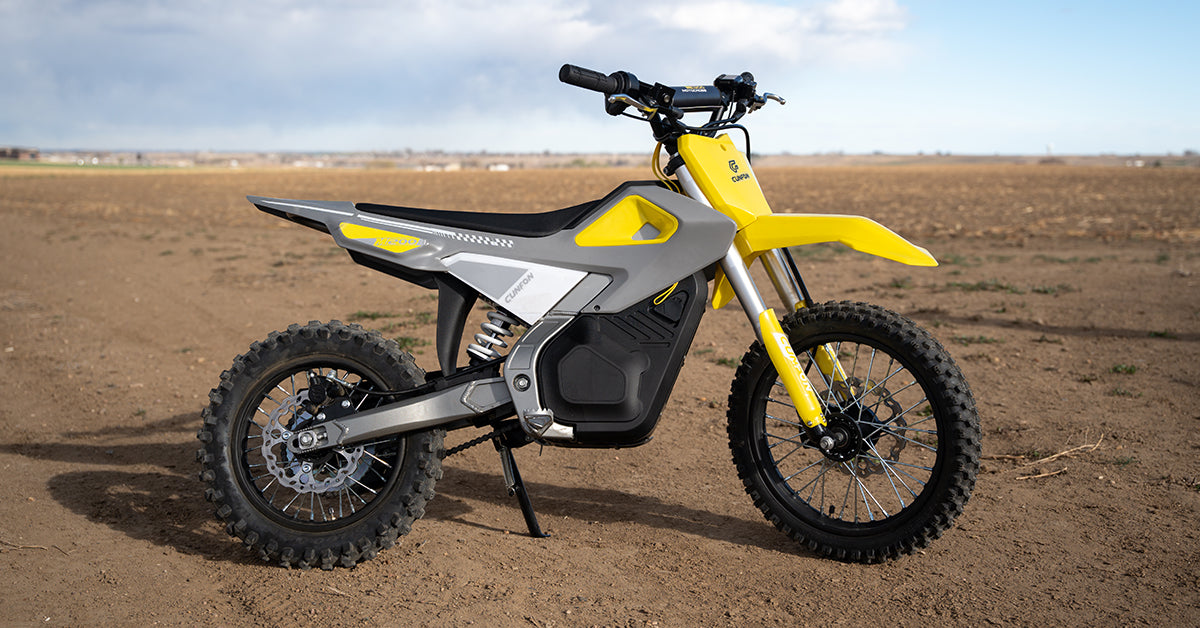
Where Can You Ride the M200 Electric Dirt Bike?
The M200 is a different vehicle category. E-scooter permissions above do not establish where it may be used.
For private land or an off-road venue, obtain permission and confirm that electric dirt bikes are allowed. Public forests, parks, trails and beaches are not automatically permitted.
Confirm vehicle approval and registration eligibility, plus any rider licensing and insurance requirements, before planning public-road use.
Queensland prohibits sales of e-mobility devices and off-road motorbikes to under-16s, including online sales. Check the purchase-age rules.
Ride Safely. Charge Safely
For detailed charging and storage advice, see Fire Rescue Victoria’s battery-safety guidance.
Before You Ride
- Wear a properly fitted, approved helmet.
- Check brakes, tyre pressure, steering and the folding mechanism against your manual.
- Respect the load limit; use the required lights and warning equipment.
- Give way, obey signs and ride to the conditions. Do not carry passengers, use a handheld phone or ride impaired.
Charging and Storage
- Use the supplied charger or an approved compatible replacement.
- Charge on a firm, non-flammable surface, away from exits.
- Stay nearby; avoid charging overnight and disconnect when fully charged.
- Stop using damaged, swollen or overheating batteries or damaged chargers and cables. Follow your manual’s storage instructions.
Riding Rules FAQ
Can I Ride an E-Scooter on a Footpath in Australia?
Not everywhere. NSW does not permit private e-scooters on public paths, and Victoria excludes footpaths. Elsewhere, permission depends on the device and location, with lower footpath limits. Use the state overview before planning your route.
Do I need a licence, registration or insurance?
Check your state and vehicle category. Victoria does not require a licence for a compliant e-scooter. Queensland generally requires a valid driver licence, including a learner licence, with specified exemptions.
Do not assume that registration or compulsory-insurance exemptions provide cover for injury, theft or property damage. Ask your insurer about your exact scooter and configuration, and check local requirements before riding.
Does the 20 km/h factory setting make a CUNFON scooter road legal?
Not automatically. The setting can be changed. Device capability, weight, dimensions, equipment and route rules still need checking. A lower selected speed cannot resolve an overweight or oversized device. See what to check before buying.
Can I ride on private property or off-road trails?
Get the landowner’s or venue operator’s permission and check site rules. Land accessible to the public may still be subject to road or road-related-area rules. Public parks, forests, beaches and trails are not automatically unrestricted riding areas. Confirm that your vehicle and operating speed are allowed.
Can I Change the Factory Speed Setting?
Yes. The factory setting on our current AU-stock RS300 PRO, RS500, RZ800 and RZ1000 can be changed. A change may affect public-use eligibility. Use a higher-speed configuration only where both the vehicle and operating speed are lawful; check requirements before changing your configuration.
Do these e-scooter rules apply to the M200?
No. The M200 is an electric dirt bike, a different vehicle category. E-scooter path permissions do not establish permission to ride it. See the M200 riding guidance above.
What are Queensland’s 2026 speed-limiting changes?
Queensland’s buying guide requires PMDs manufactured after 1 July 2026 to be limited to 25 km/h by software or hardware. It gives faster devices until 28 February 2027 to be limited. This transition does not permit speeding.
Confirm the manufacturing date and exact limiting configuration with the retailer. Follow the official Queensland buying guide and current riding rules.
Can I take my scooter on a train, tram or bus?
Check the transport operator’s current carriage conditions before travelling. Permission to ride on a path does not establish permission to take a scooter on public transport. For example, South Australia currently does not permit PMDs on Adelaide Metro trains, trams or buses. See South Australia’s official guidance.

Official Sources and Updates
Disclaimer: This guide is an editorial summary for general information and is not legal advice. E-scooter rules and trial arrangements may change. Before riding, check the official road-authority guidance for your state or territory, your local council’s rules and any restrictions on your intended route. This summary does not cover every rule or exemption.
Sources checked on 6 November 2026. This date records the source review; it does not indicate that any CUNFON model has received public-use approval.